On this page (5 sections)
The fare, and where it is charged
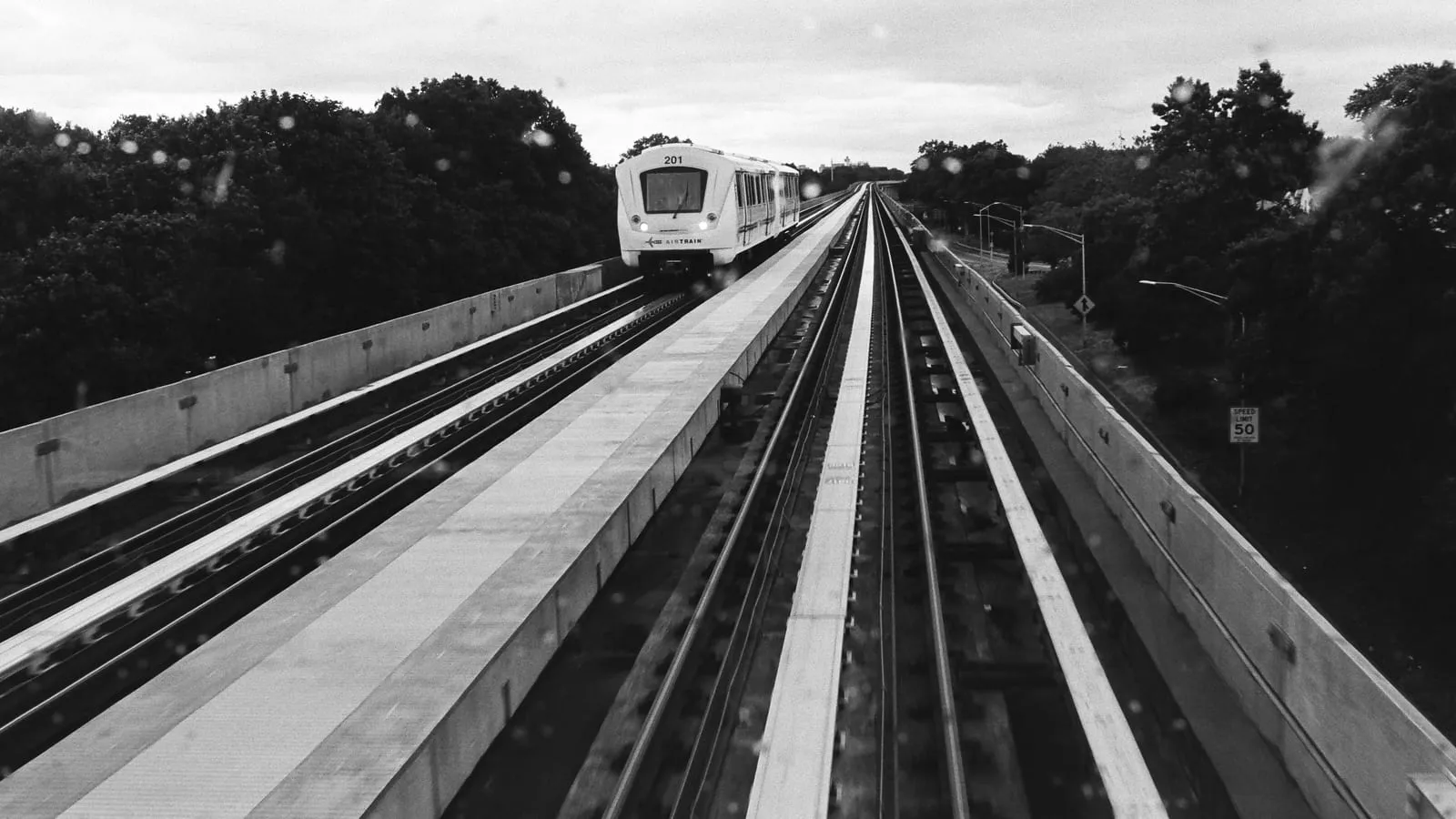
The single most useful thing to know about the AirTrain is not the fare, it is where the fare lives. Riding anywhere inside the airport is free: between all six terminals, to the Lefferts Boulevard long-term parking lot, and to Federal Circle for the rental car center and hotel shuttles. The $8.75 exists only at the two stations that connect to the city, Jamaica and Howard Beach, charged when you pass their fare gates in either direction. A connecting passenger changing terminals never pays; a passenger heading into the city always does, once.
Payment is a tap: any contactless credit or debit card, a phone or watch, or an OMNY card, which the vending machines at the Howard Beach and Jamaica subway stations sell and refill with cash or card. Three built-in discounts apply automatically as long as the same card does every tap. Children under five ride free. A group traveling together pays $8.75 for the first rider and $4.50 for each additional, up to five riders and a $26.75 maximum, if everyone taps within five minutes (the card then locks for 15). And a rolling 30-day cap of $43.50 makes further rides free for the rest of the 30 days, which frequent flyers hit on the fifth trip.
One trap to avoid: the AirTrain's 30-day cap and OMNY's separate $35 weekly cap for subways and buses are different systems and do not pool. Paying for the AirTrain never counts toward free subway rides, or the reverse. Budget the two fares separately, the way the Manhattan route guide does in its totals.
The stations, one by one
The system has three arms meeting at Federal Circle and Jamaica. Around the terminal loop, every operating terminal has its own station: Terminal 1, Terminal 4, Terminal 5, Terminal 7 and Terminal 8, with Terminal 4's attached to the building so you walk in without going outside, and Terminal 5's serving the new Terminal 6 gates through the Terminal 5 building. The loop is how you change terminals at JFK, and the terminal transfer guide covers that trip in detail.
Off the loop, three stations do specific jobs. Federal Circle is the stop for the rental car center and the designated hotel shuttle pickup area; if a hotel advertises a free JFK shuttle, this is where it loads. Lefferts Boulevard serves the Long-Term Parking Lot, which at $55 a day, and from $39 prebooked, is the honest answer for most parked cars. And the two paid gateways: Howard Beach, where the A train waits, and Jamaica, the biggest interchange, where the LIRR and the E, J and Z subway lines all connect under one roof with the AirTrain mezzanine above.
Connecting at Jamaica and Howard Beach
Jamaica is the connection that matters most. The LIRR from there reaches Penn Station or Grand Central Madison in about 20 minutes, and a CityTicket keeps the fare civilized for any trip within New York City: $5.25 off peak, $7.25 peak, where peak means weekdays 6:00 AM to 10:00 AM and 4:00 PM to 8:00 PM. Buy it in the TrainTime app or from a machine before boarding. Door to door, the airport quotes about 30 minutes from JFK to either Manhattan terminal, for $14.00 to $16.00 including the AirTrain.
The same Jamaica complex serves the E train for a one-seat subway ride to midtown, about 50 minutes from the airport for $11.75 all in, and the J and Z toward lower Manhattan through Bushwick and Williamsburg. Howard Beach hands you the A train, the right answer for lower Manhattan and much of Brooklyn, about 60 minutes to downtown. Which of these wins for your trip is exactly what the Manhattan guide and the subway guide settle; going east instead, the LIRR from Jamaica also runs deeper into Long Island, with regular fares beyond the city line.
Frequency, luggage, accessibility, and scale
Trains run every 5 to 15 minutes, and the terminal loop takes under 10 minutes end to end, which is why a terminal mistake at JFK costs you twenty minutes rather than your flight. No operating hours are published for the system at all, so plan an unusual-hour trip with margin. When sections of the system are disrupted, the airport runs free replacement shuttle buses from ground level at the affected stations.
Accessibility is stated plainly by the airport: every AirTrain station is fully accessible, and both city-side connections, the Howard Beach subway station and the Jamaica LIRR station, are ADA-accessible. Scale-wise, this is not a shuttle bus with rails: the system opened in 2003 and carried a record 27 million riders in 2025, per the Port Authority's own traffic report.
Practical tips
- Never pay to change terminals. The loop is free. If a fare gate wants $8.75, you are at Jamaica or Howard Beach, one stop past where a terminal change needed you to be.
- Use one card for the whole family, deliberately. The group rate caps five riders at $26.75 and applies automatically when everyone taps the same card within five minutes.
- Match the exit to the destination. Jamaica for the LIRR, the E, and midtown; Howard Beach for the A and downtown. Choosing wrong costs a transfer, not a disaster.
- Meeting a hotel shuttle, ride to Federal Circle. That is the designated pickup area, and the ride there is free. The same stop serves the rental car center.
- Parking long term, get off at Lefferts Boulevard. The lot there undercuts every terminal garage by at least $19 a day, and the AirTrain back to your terminal costs nothing.
- Flying at a strange hour, leave margin. No official page publishes the system's hours, so treat frequency as the promise and the timetable as unknown.