On this page (7 sections)
The address, ZIP code, phone, and codes
The full postal form is John F. Kennedy International Airport, Jamaica, NY 11430, United States. American Airlines lists the airport under exactly that name, city, and ZIP on its own JFK page, and U.S. Customs and Border Protection adds the country line and its own building number for its port office. The ZIP code, 11430, is the one the FAA's airport record lists for JFK. If you are mailing something to a specific office, get the building number from the recipient; the ZIP alone reaches the airport, not a desk.
The general phone number is +1 (718) 244-4444, the airport's own line for questions, and its contact page also offers WhatsApp, email, and a live video call with an agent. A question about a flight, a booking, or a bag belongs to the airline; the airport's contact page routes airline feedback to the airline, and keeps the number above for the airport itself.
On a ticket or a booking site the airport is JFK, its IATA code. In aviation paperwork it is KJFK, the ICAO identifier. The FAA's airport record puts the field at 40.6399° N, 73.7787° W, 13 feet above sea level, in the Eastern time zone.
Where JFK actually is
JFK sits on Jamaica Bay in the southeastern section of Queens, inside New York City, 15 miles by highway from midtown Manhattan by the Port Authority's own measure. It is not in Manhattan and never was: the borough is Queens, and the skyline you can see from the runways is the far end of the trip.
The scale is why so much of this page is about roads and lots rather than a single pin. The Port Authority's 2025 traffic report puts the airport at 4,930 acres, 880 of them in the Central Terminal Area where the terminals stand, threaded by more than 30 miles of internal roadway. Six terminals operate, numbered 1, 4, 5, 6, 7, and 8, separate buildings spaced around a loop; how they sit is drawn out on the JFK airport map guide.
The Port Authority of New York and New Jersey has run the airport since June 1, 1947, under a lease with the City of New York that now extends through 2050. Commercial flights began on July 9, 1948, when it opened as New York International Airport, though it was widely known as Idlewild, after the golf course the land replaced. It was rededicated for President Kennedy on December 24, 1963.
Driving in: the right road for your terminal
Mid-rebuild, the road you want depends on the terminal you want. The airport's standing guidance as of September 2026: take the Van Wyck Expressway (I-678) for direct access to Terminals 1 and 4, and the JFK Expressway for direct access to Terminals 5, 7, and 8. The Belt Parkway connects to both: it meets the Van Wyck near the airport entrance, and the JFK Expressway branches off it. So the sign you follow at the final split matters more than the route your app drew three boroughs ago.
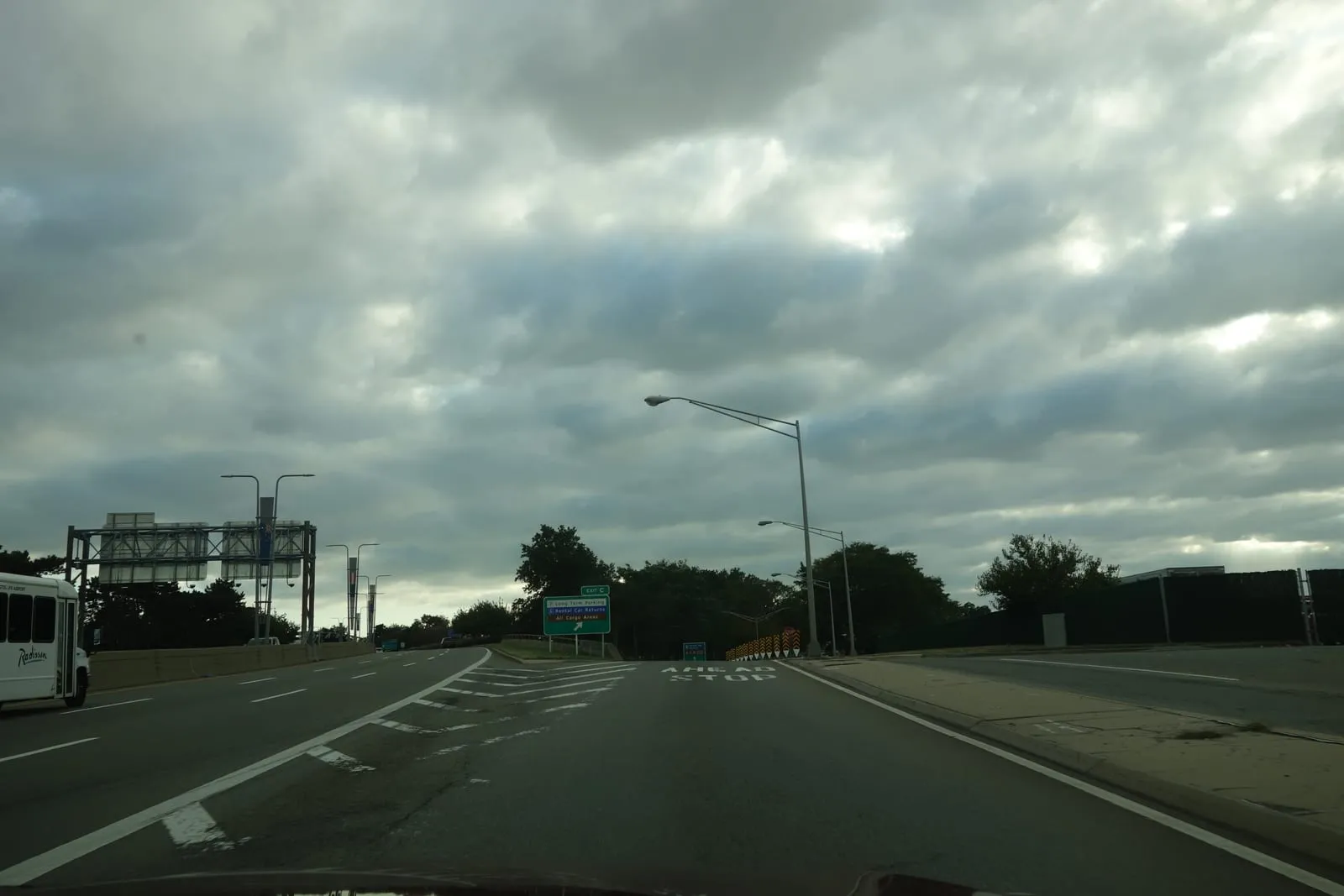
Expect the drive to cost more time than the map says. The whole airport is inside a $19 billion rebuild, the state's separate Van Wyck widening project was still finishing as of late summer 2026 per local reporting, and getting to and from JFK genuinely takes longer than usual because of it, so allow significantly more time. Road layouts have changed more than once during the work, map apps lag, and when a posted terminal sign and your GPS disagree, believe the sign.
For the GPS, aim at the terminal, not the airport. "Jamaica, NY 11430" or "JFK Airport" lands you on airport property with the split still ahead of you; entering the terminal by name gets the lane choices right. That means knowing the terminal before you leave, which is worth 30 seconds against the airline terminal guide, because allocations move during the rebuild. The airport also publishes two GPS entries of its own for the free waiting areas below: "JFK Cell Phone Lot" and "JFK Lefferts Boulevard AirTrain Station."
At the terminal, the curb is for the drop-off itself. You can unload bags and passengers outside each terminal in most cases, but a vehicle cannot wait at the curb unless the passengers and bags are ready, parking is not allowed in front of or next to any terminal, and an unattended vehicle is towed at the owner's expense. Those are the airport's own rules. If you are parking rather than dropping off, the five official lots and their rates are compared on the JFK parking guide.
Picking someone up: two free places to wait
The pickup system is built around not waiting at the curb. The airport gives drivers two free lots to hold in until the traveler is actually outside with bags in hand, and it recommends one or the other by terminal.
The Cell Phone Lot, the one the airport labels East, sits near the JFK Expressway, less than 5 minutes from all terminals, and it is the closer hold for Terminals 5, 7, and 8. Enter "JFK Cell Phone Lot" in your GPS or follow the signs from the airport entrance.
The free wait lot at Lefferts Boulevard AirTrain Station is the other option, closest to Terminals 1 and 4 and reached from the Van Wyck Expressway or the Belt Parkway near the airport entrance. You must stay in your vehicle at all times. It also works as a drop-off: anyone you leave there rides the AirTrain to any terminal free, a ride of about 8 minutes, which is the airport's own suggestion for skipping the curb congestion entirely.
Time the pickup off the bag, not the landing. A flight showing landed on the live arrivals board can still be taxiing, then at the gate, then waiting on the carousel, and on an international arrival immigration comes before the carousel. Hold in the lot until the message says curbside, then make the short move in.
To greet someone inside the terminal instead, park. The airport's answer is short-term parking in a terminal garage, since curbs are no-waiting and only ticketed passengers go past security. Arrivals halls are before security, so meeting at the exit doors works once the car is in a garage.
Hotel shuttles and rental cars: Federal Circle
Hotel shuttles do not circle the terminals. JFK keeps a designated hotel shuttle pickup and drop-off area at Federal Circle Station, on the AirTrain's Jamaica and Howard Beach lines, and hotels meet their guests there. Off a flight, follow the AirTrain signs, ride to Federal Circle free, and confirm the shuttle schedule with the hotel if it is not posted.
Rental cars work the same way: the rental car center is at Federal Circle Station too, and the AirTrain ride to it costs nothing from any terminal. The AirTrain guide covers the system end to end, including the one place it charges: $8.75, only when you enter or exit at Jamaica Station or Howard Beach Station.
Coming without a car
Without a car, everything runs through the AirTrain: free between terminals and around the airport, $8.75 only at the Jamaica and Howard Beach stations, with the subway and the Long Island Rail Road waiting on the far side. The train beats the traffic, and the door-to-door numbers back it up.
A yellow cab is the flat-fare alternative, $70 between JFK and Manhattan before surcharges and tip, covered on the taxi guide. Every option side by side, trains, cabs, apps, and shuttles, with real costs and times, is on the JFK transport guide.
Practical tips
- Know your terminal before you leave the house. JFK's six terminals are separate buildings spaced around a loop, and airlines move between them during the rebuild. Check the booking first, and treat a terminal remembered from last time as unchecked.
- Put the terminal in the GPS, not the airport. An address that covers 4,930 acres gets you to the property, then abandons you at the split. The terminal name gets the lanes right.
- Trucks and commercial vans stay off the Belt Parkway. New York bans commercial vehicles from its parkways, the Belt included, and parkway clearances are low. Route a truck or a commercial van on the expressways instead, the Van Wyck included.
- Waiting is free, curbs are not for waiting. The Cell Phone Lot and the Lefferts Boulevard wait lot both cost nothing and sit minutes from the terminals. An unattended car at the curb is a tow.
- Give an international arrival extra slack. Immigration and baggage sit between landed and curbside. Watch the board, and move when your traveler says they are outside.